

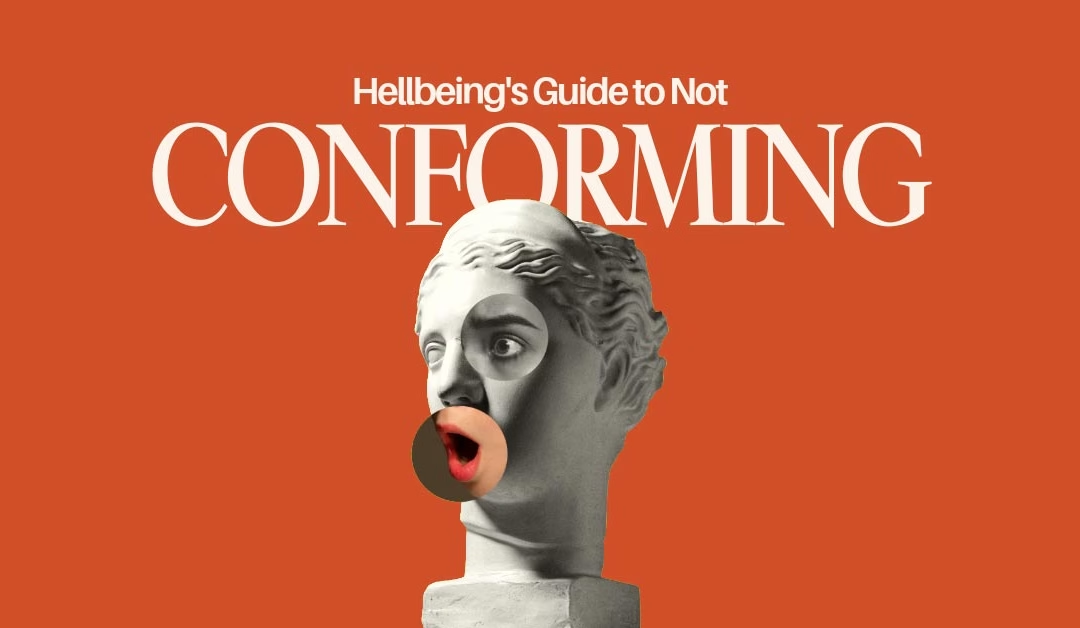
Non-conformity is not being contrary — that is still the norm driving your behavior in reverse. Hellbeing on what actual non-conformity requires and why it is mostly invisible from the outside.
Estimated reading time: 4 minutes
The Hellbeing Guide to Not Conforming and What That Actually Means
Non-conformity is not being contrary. Being contrary is a response to the norm — you see what the norm is and you do the opposite because it is the opposite. That is still the norm driving your behavior. It has just reversed the direction. Actual non-conformity is something quieter and harder. It is making decisions based on what you actually want rather than what the people around you expect, which requires first knowing what you actually want — which turns out to be more difficult than it sounds because most people have been optimizing for expectations for long enough that the two things have become hard to separate.
What Conformity Actually Is
Conformity is the accumulated weight of other people’s definitions of what a good life looks like. It arrives gradually and from many directions — family expectations, peer comparisons, professional norms, cultural assumptions about what a person of your age and background and situation should be doing and wanting. None of these inputs are malicious. Most are well-intentioned. The problem is that they are about what works for other people or for the average person or for the institutional structures that need you to behave predictably. They are not about what works for you specifically.
The corporate puppet pattern is one version of this — the person who has been making reasonable individual decisions that each made sense in isolation and arrived at a life they did not actively choose. The conformity was not forced. It was the path of least resistance, and paths of least resistance tend to lead to the destinations that were designed for you rather than the ones you would have designed yourself.
What Not Conforming Actually Requires
It requires knowing what you want well enough to pursue it in the face of expectation pressure. This is the part that is actually hard. The decision not to take the safe job, not to follow the expected sequence, not to want the things you have been told you should want — these decisions require a level of self-knowledge that does not come naturally in environments that have been consistently telling you what to want.
It also requires accepting the social cost. Deviating from expectations produces friction. The people around you who have made conforming choices will experience your non-conforming choice as a commentary on theirs, even if it is not intended as one. Some will voice this discomfort. Some will express it as concern. Some will simply become less present. This is not a reason not to do it. It is just a thing that happens and it is worth knowing about in advance rather than being surprised by it.
What It Is Not
It is not performing non-conformity for an audience. Telling people you do not care what they think, loudly and repeatedly, is caring what they think in a different direction. The escape from the grind that gets documented on social media, the curated anti-establishment aesthetic, the carefully photographed rejection of conventional success — these are often conformity to a different set of expectations rather than genuine independence from expectations. The distinction is whether the choices are being made for yourself or for the audience watching you make them.
Actual non-conformity is mostly invisible from the outside. It looks like a person making decisions that do not require external validation and not particularly needing anyone else to understand or approve of them. It looks, in other words, like building something for the reasons that matter to you rather than the reasons that will read well to someone else.
More at Infernal Insights.
How To
How to actually not conform rather than perform not conforming
- Separate your actual priorities from the institution’s version of them
The corporate environment, peer groups, and social expectations have been answering the “what matters” question on your behalf. Recovering your actual answer requires asking it deliberately and noticing when the response you get is someone else’s rather than yours.
- Accept the social cost in advance
Deviating from expectations produces friction. The people around you who have made conforming choices will experience your non-conforming choice as a commentary on theirs. Some will say so. Knowing this in advance rather than being surprised by it makes the friction easier to navigate.
- Make choices for yourself rather than for an audience
The clearest sign that non-conformity has become performance is that the choices are being made for how they will read to others. Actual non-conformity does not require an audience. It looks like a person making decisions that do not need external validation and not particularly needing anyone to understand them.
- Build relationships with people who understand without explanation
The inner circle worth building consists of people who do not require you to justify your choices. Finding them takes time. Maintaining the relationships that do not require justification is one of the clearest signs that you have found the right ones.
Frequently Asked Questions
Being contrary is a response to the norm — you see what the norm is and do the opposite because it is the opposite. That is still the norm driving your behavior, just in reverse. Actual non-conformity is making decisions based on what you actually want rather than what the people around you expect. The norm is not the reference point at all.
By distinguishing between the people whose opinions are relevant to you and the people whose opinions are not. Not caring what people think is not the goal. Caring about the right people’s opinions — the ones who have earned that weight through genuine relationship — while being less moved by the rest is closer to the actual target.
It depends on what you are non-conforming about and what the social cost actually is. Minor deviations from expectation carry minor costs. Significant deviations from significant expectations — career, relationships, location, how you spend your time — carry real costs. The question worth asking honestly is whether what you gain by not conforming is worth what you pay. Sometimes it clearly is. Sometimes it requires more examination.