

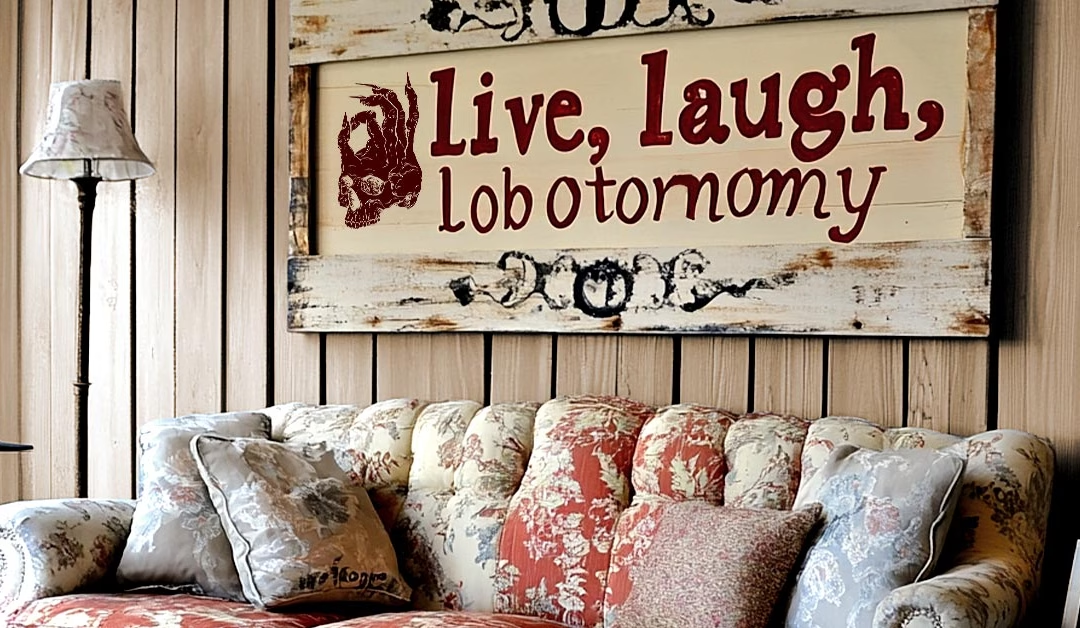
The Live Laugh Love sign is not decor. It is a wooden press release about your emotional state that you have nailed to the wall so nobody has to ask. Hellbeing on what it is actually doing there.
Estimated reading time: 10 minutes
Live Laugh Love Decor and the People Who Hang It
Someone, at some point, stood in a store, picked up a wooden sign that said “Live Laugh Love” in a cursive font, looked at it, thought “yes, this is what my wall needs,” paid money for it, brought it home, and hung it up. And then at some later point, presumably while sitting in the room with it, did not take it back down. That’s the part I keep coming back to. The not-taking-it-back-down. Because there was a second chance. There was a moment of reflection available. And the sign stayed.
What the Sign Is Actually Saying
Let’s take the advice at face value for a moment because I think that’s fair. Live. Okay. Doing that already, technically. It’s not something I needed a sign for, but sure, noted. Laugh. Yes, when something is funny, that happens. Again, not a revelation. Love. Fine, yes, in general, agreed. All three of these are things I was already planning to do without the wooden reminder. So the sign is not providing instructions. It’s not solving a problem. It’s not answering a question anyone had. It is simply existing on the wall, in cursive, taking up space that could be literally anything else.
The follow-up question, which I think is reasonable, is: who is this for? Is it for guests? Are guests coming in and thinking, oh good, they live and laugh and love here, I was worried. Is it for the person who lives there? A daily reminder not to forget to laugh? Because if you need a sign to remind you to laugh, that’s a different conversation entirely and the sign is not going to fix it.
The Part Where It Multiplied
Here’s what makes it worse. It didn’t stay at Live Laugh Love. That was just the beginning. Now there are signs that say “But First, Coffee” and “This Kitchen Is Seasoned With Love,” which raises significant hygiene questions, and “Home Is Where The Wi-Fi Is,” which is the kind of joke that was slightly amusing in 2013 and has been on a wooden board in a Hobby Lobby ever since, waiting. Just waiting for someone to buy it and complete the transaction.
And people do. People keep buying them. Someone is designing these. Someone is manufacturing them. Someone is putting them on a shelf. And then someone is walking past that shelf, stopping, and deciding that this is the thing. This is what the empty wall needs. Not art. Not a mirror. Not a photograph of something that actually happened in their life. A board. With a saying. In cursive.
The Honest Version of What’s Happening
I think it’s the same impulse as small talk. It’s the performance of a feeling rather than the feeling itself. The sign doesn’t mean you’re happy. It means you’d like people who visit to assume you’re happy. It’s decor as impression management. A wooden press release about your emotional state that you’ve nailed to the wall so nobody has to ask. Which would be fine — genuinely, do whatever you want with your walls — except the signs are never ironic. They are always sincere. Someone hung that sign and meant it. And that is the detail that makes it so specifically strange.
It’s in the same family as the opinions nobody asked for — the projection of a self-image onto a surface and then the expectation that everyone around you will receive it as true. The sign says “this is a home full of love.” The sign cannot verify this. It was made in a factory and it will end up in a garage sale and it will be purchased again and hung again in a different house where it will mean exactly as much as it did before, which is nothing, which has always been nothing.
And Then Came the Cricut
Just when you thought the sign situation had reached its natural ceiling, someone invented a machine that lets you make your own signs at home. Now the saying doesn’t even have to be one of the classic ones. Now it can be custom. Now it can say anything. And people are using this power — this genuinely impressive piece of technology — to make signs that say “Grateful Thankful Blessed” and hang them above their dining tables. The machine is capable of producing anything. Literally anything. And they chose that.
What to Put on the Wall Instead
Nothing. Put nothing on the wall. Or put something that means something to you specifically — a photo, a piece of art you actually chose, a shelf with something on it you actually use. Anything with a traceable connection to your actual life rather than a sentiment so broad it applies equally to every human being alive. Live Laugh Love works as advice for everyone on earth, which means it was written for no one in particular, which means it has nothing to do with you, which means it has no business being on your wall.
You are a specific person with a specific life. Your wall should know that.
More of this at Infernal Insights. And if you’re looking for something to wear that doesn’t require a wooden sign to explain who you are, the apparel does that for you.
Frequently Asked Questions
Because the sentiment is universally agreeable and the format is low-commitment. Nobody disagrees with living, laughing, or loving. The sign asks nothing of the person who hangs it and communicates warmth to anyone who visits. It is a very efficient piece of impression management — broad, inoffensive, and cheap.
As advice, it means nothing specific. Live, laugh, and love are things most people were already planning to do. As decor, it communicates that the person who hung it wants their home to read as warm and positive. The sign is not for living by. It is for being seen by.
No — the choice is entirely personal. The observation is specifically about signs whose sentiment is so broad it applies equally to every human being on earth, which means it was written for no one in particular, which means it has a limited connection to the specific person who hung it. More specific decor — photos, art, objects with actual history — communicates more about who you actually are.
Anything with a traceable connection to your actual life. A photograph from somewhere you have been. A piece of art you chose because you responded to it specifically. A shelf with objects that mean something. The wall should know who lives there. Live Laugh Love is a wall that does not know anyone.