
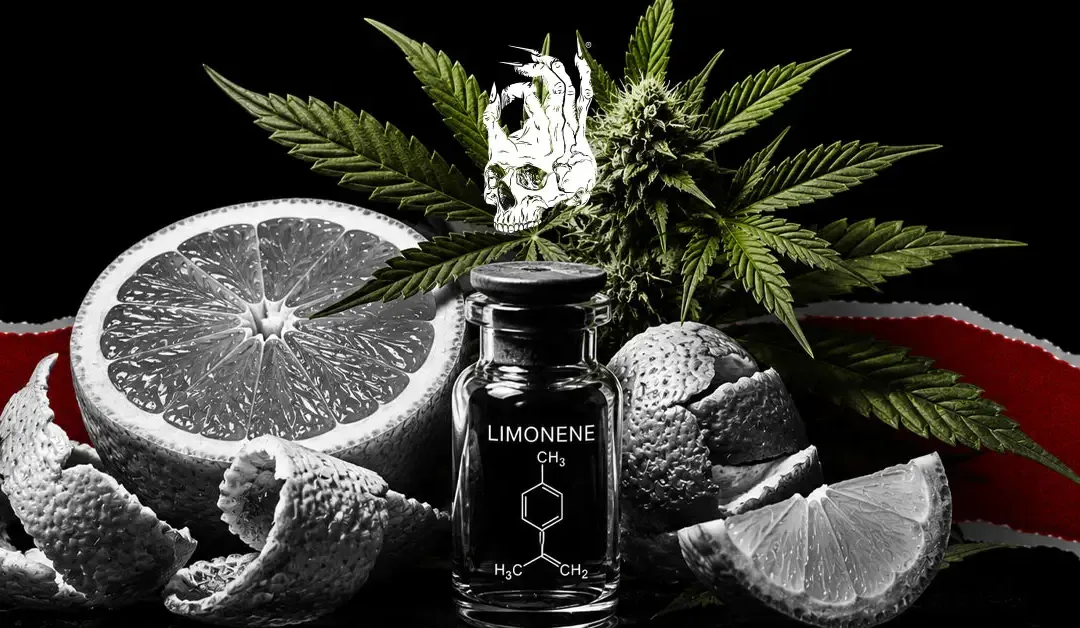
Limonene: The Citrus Terpene That Might Take the Edge Off
If a cannabis flower smells bright, lemony, or like orange peel, you are smelling limonene. It is one of the most common and recognizable terpenes in cannabis, and one of the few with a growing pile of research that is actually interesting rather than just hopeful. People reach for limonene-heavy strains expecting a lift, and unlike a lot of terpene folklore, there is a real study worth knowing about here. So below is what limonene is, what it is credited with, and where the evidence stands.
What limonene is
Limonene is a terpene, one of the aromatic compounds that gives a cannabis flower its smell. As the name suggests, it smells like citrus, bright and zesty, lemon and orange. It is not remotely unique to cannabis. Limonene is what makes citrus peels smell the way they do, and it is used widely in cleaning products and air fresheners for exactly that reason. In cannabis it is one of the more abundant terpenes, and it tends to show up in flowers people describe as uplifting or energizing.
The reputation
Limonene’s reputation is mood. It is the terpene associated with feeling brighter, lighter, more energized and less stressed, the opposite of the heavy, sedating reputation that follows myrcene. Strains loud with citrus are often marketed as daytime or social options for this reason. As with every terpene, you should treat the confident effect claims with some caution, because terpene marketing loves to promise specific feelings the science cannot fully back. But limonene is a more interesting case than most, because of one study.
The research worth knowing
Here is the part that sets limonene apart. Researchers at Johns Hopkins ran a double-blind study, published in 2024, looking at whether limonene could blunt the anxiety that THC sometimes causes. The preliminary finding was that it could: participants given limonene alongside THC reported less of the anxiety and paranoia that high doses of THC can bring on, compared to THC alone, and the effect grew stronger as the limonene dose went up. That is a genuinely notable result, because it is one of the cleaner pieces of evidence that a terpene can actually modify a cannabinoid’s effect in a person, not just in a petri dish.
One thing the study does not show is that smelling or smoking a citrus-heavy flower will do the same thing. The researchers used measured, vaporized doses of isolated limonene, far more than the trace amount that gives a flower its smell. It is one study, it is early, and it is not a license to make sweeping claims. But it is real, and it is more than most terpenes can point to.
What is fair to take from it
A grounded read on limonene looks like this. It reliably contributes a bright, citrus smell and flavor, and that part is not in question. It tends to appear in flowers people find uplifting, so a strong citrus nose is a fair hint that a flower might lean energetic rather than sedating. And there is early, real evidence, from controlled doses in a lab, that limonene may take the edge off THC’s anxiety, which is a more concrete finding than you can make for most terpenes, even if it does not yet translate into a promise about any particular flower. What it is not is a guaranteed mood switch. It is a promising compound with one good study and a lot still to learn, which is honestly a refreshing place for terpene science to be.
It makes a useful contrast with the terpene that gets blamed for the opposite effect, which we dug into in Myrcene: The Terpene Blamed for Couch-Lock. And if you want to understand why a terpene affecting a cannabinoid is a bigger deal than it sounds, that is the whole debate in The Entourage Effect. Limonene is one of the listed terpenes in our Platinum Kush, which is part of why it smells the way it does.
None of this is medical advice, and how any of it lands depends on the person. It is early research, described as early research.
More terpenes explained without the fairy dust at Infernal Insights.
Frequently Asked Questions
What does limonene smell like?
Citrus, bright and zesty, like lemon and orange peel. It is the same compound that gives citrus rinds their smell and is widely used in cleaning products for that scent.
What effects is limonene associated with?
Mood — a brighter, more energized, less stressed feeling. Limonene-heavy strains are often marketed as uplifting or daytime options, though terpene effect claims in general should be taken with some caution.
Does limonene reduce anxiety from THC?
Preliminary research from Johns Hopkins suggests it might. In that double-blind study, people given measured doses of limonene with THC reported less THC-induced anxiety than with THC alone. It is an early but notable finding, not a settled fact, and it has not been shown to apply to simply choosing a citrus-smelling strain.
Is limonene only found in cannabis?
No. Limonene is abundant in citrus peels and shows up in many plants, plus cleaning and cosmetic products. In cannabis it is one of the more common terpenes.
Does a citrus smell mean a strain is energizing?
It is a reasonable hint, not a guarantee. Limonene tends to appear in flowers people find uplifting, so a strong citrus nose suggests a brighter character, but smell is a clue to chemistry, not a promise of a specific effect.