The event-specific outfit is a social strategy — dress like you belong and the crowd accepts you. Hellbeing on the difference between that and having an actual personal style.
Estimated reading time: 8 minutes
The Person Who Dresses for the Event Like It Is a Costume Contest
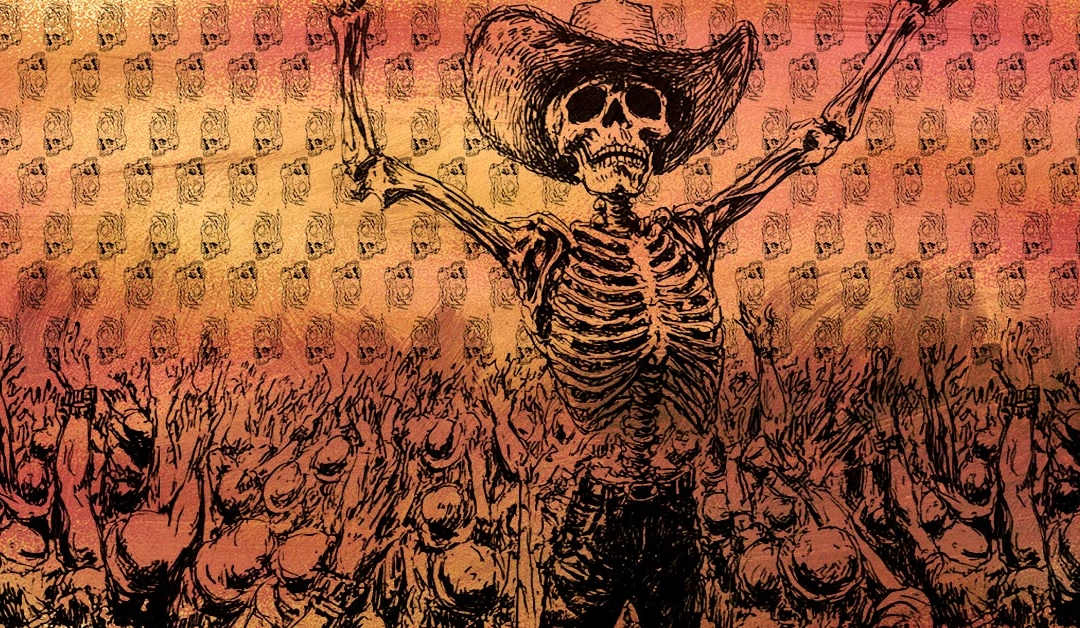
The country concert happened and the cowboy hat came out. Not a hat this person owns in any other context. Not a hat with any history attached to it. A hat purchased specifically for this occasion, worn once, and retired to a shelf where it will sit until the next Morgan Wallen tour or until the person moves and has to decide whether it comes with them. It usually comes with them. The hat means something. It is just not entirely clear what.
The Taxonomy of the Event-Specific Outfit
The cowboy hat and boots for the country show. The black eyeliner and fishnets for the punk or goth concert, deployed by someone whose normal aesthetic is business casual and who spent the afternoon Googling “how to look emo without going too far.” The flower crown and linen layers for the festival, worn by a person who would describe their personal style as “classic” on any other occasion. The Misfits shirt, purchased that afternoon, worn by someone who cannot name three Misfits songs but felt the shirt communicated the right energy.
The energy is the thing. The outfit is communicating an identity appropriate to the context. The problem is that identity is not supposed to be context-dependent. It is supposed to be the consistent thing underneath all the contexts. The concert outfit is not wrong because it is a costume. It is wrong because the person wearing it seems to believe it is not.
What Is Actually Happening
The event-specific outfit is a social strategy. You put on the costume that signals membership in the group you are temporarily joining. You show up looking like you belong there. The crowd accepts you because you are wearing the uniform. It works. The strategy is effective. But it requires a different uniform every time, which means you are never actually dressed as yourself. You are dressed as a version of yourself optimised for whoever is in the room.
This is adjacent to the opinion problem — the person who adjusts their stated views to match the room they are in. Both strategies achieve short-term social acceptance at the cost of having an actual identity. Both require constant management. Both leave the person exhausted in a way they cannot quite explain because the exhaustion is not from doing too much. It is from being a different person all day.
The Festival Is Its Own Category
Coachella deserves a separate paragraph because the scale of the costume commitment there is genuinely impressive. The flower crowns, the crochet sets, the body glitter applied to a person who works in finance and whose relationship to the counterculture is entirely mediated by a ticket purchase — all of it deployed with complete sincerity as if the outfit is the statement rather than evidence that the statement was purchased.
Burning Man is the extreme version of this, where the costume is not just worn but elaborately theorised. The person in the elaborate steampunk ensemble with the philosophical explanation for every element of it is, underneath the explanation, still just a person in a costume at a party. The costume is more expensive and the explanation is longer but the underlying mechanism is the same.
The Thing About Actual Personal Style
Personal style, the real version of it, is recognisable across contexts. You can identify it in a grocery store and at a concert and at a work event because it is not responding to the environment. It is just what the person wears because it is who they are. It does not require research or preparation or a hat purchased specifically for this occasion. It is just there, consistent, every day, regardless of what the event requires.
This is harder to achieve than it sounds because it requires knowing who you actually are well enough to wear it in public without the validation of context. The cowboy hat at the country concert is safe because everyone else is also wearing the cowboy hat. The personal style in a mixed crowd is exposed because nothing external is justifying it. It is just the person in the thing they always wear because they always wear it. That is the outfit that means something. Not because it was chosen for the room. Because it was chosen before the room was known.
More at Infernal Insights. The Hellbeing apparel is made for people who wear the same thing regardless of the room. It is not a costume. It is just what it is.
Frequently Asked Questions
Personal style is recognizable across contexts — you can identify it in a grocery store and at a concert because it is not responding to the environment. It is just what the person wears because it is who they are. Event dressing responds to the context. Personal style predates the context and does not require it for justification.
No — dressing intentionally for an event is completely reasonable. The observation is specifically about the person who has a completely different aesthetic for every event they attend, none of which resemble how they dress in any other context. The costume is fine. Believing it is not a costume is the interesting part.
Start by identifying what you wear when there is no event to dress for and no audience to dress for. That is your baseline. Build from there rather than from what different social contexts seem to require. Authentic personal style is what remains when you remove the costume logic entirely.