Hemp in America: From Founding Crop to Felony and Back
A fact that annoys people on both sides of the weed debate: hemp was once one of the most important crops in America, grown by the founding fathers, required by law in some colonies, and woven into the literal fabric of the early country. Then it spent about half a century as a federal felony, lumped in with the drug it barely resembles in effect. Now it is legal again, sort of, with a fresh complication as of late 2025. The story of hemp in America is a near-perfect example of how cannabis policy has almost nothing to do with the plant itself.
First, what hemp even is
Hemp and marijuana are the same species, Cannabis sativa, but bred for opposite purposes. Hemp is grown for fiber, seed, and now CBD, and it contains only trace amounts of THC, the compound that gets you high. The legal line is a specific number: a plant with no more than 0.3 percent delta-9 THC by dry weight is hemp, and anything above that is marijuana. You cannot get high off hemp. The distinction is real, but as you will see, the law spent a long time pretending the two were the same thing.
The founding crop
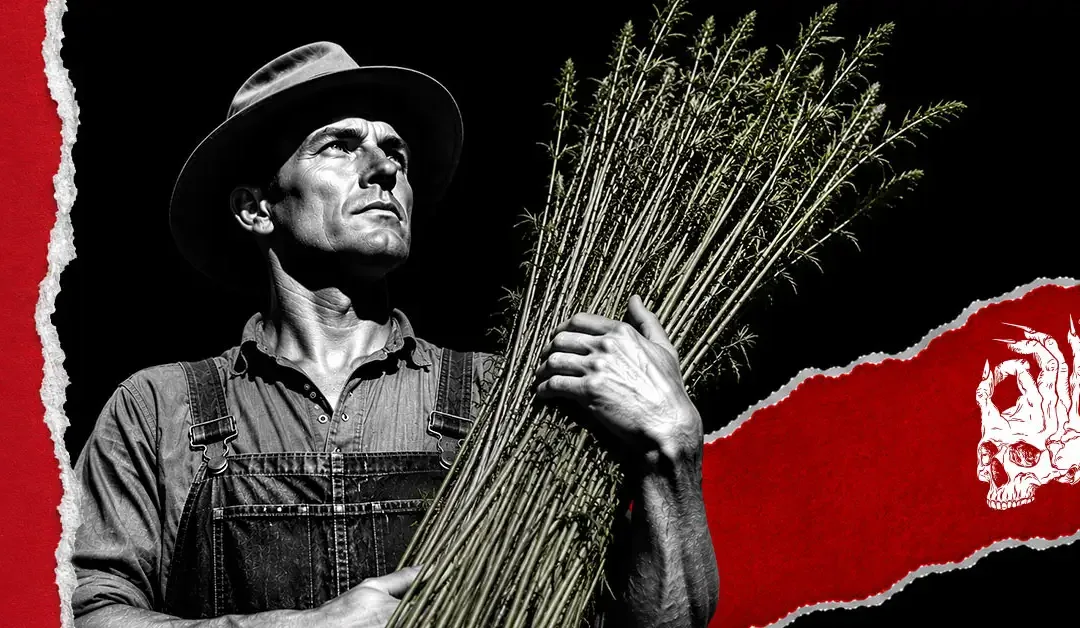
In colonial America, hemp was not just legal, it was mandatory in places. Several colonies passed laws requiring farmers to grow it, because the empire needed the fiber for rope, sails, and textiles, and a navy ran on it. George Washington and Thomas Jefferson both grew hemp on their estates. The paper, the rope, the canvas, and the word canvas itself traces back to cannabis, were everywhere in early American life. For the first century and a half of the country, hemp was simply a useful, unremarkable crop, about as controversial as flax.
How a useful crop became a felony
Hemp’s downfall was collateral damage. When the anti-cannabis campaign of the 1930s pushed through the 1937 Marihuana Tax Act, the law did not bother to separate industrial hemp from the psychoactive plant. They were the same species, so the same crushing tax-and-permit scheme landed on both, and hemp farming withered under the paperwork. There was a brief revival during World War II, when the government suddenly needed fiber again and produced a film literally titled Hemp for Victory urging farmers to grow it, but it did not last. The final blow came in 1970, when the Controlled Substances Act swept all cannabis, hemp included, into Schedule I, the same category as heroin. A plant you cannot get high from was now, on paper, one of the most dangerous substances in the country.
The slow road back
It took decades to undo. The first crack came with the 2014 Farm Bill, which created a legal definition of industrial hemp, that 0.3 percent line, and let states run limited hemp research pilot programs. The real change arrived with the 2018 Farm Bill, which removed hemp from the Controlled Substances Act entirely, made it an ordinary agricultural commodity again, and allowed it to be grown and shipped across state lines. After nearly fifty years as a federal felony, hemp was a legal crop once more, and the CBD industry exploded almost overnight.
The loophole and the 2025 fix
Then came the twist that is still playing out. The 2018 law defined hemp only by its delta-9 THC level, and the industry noticed the gap. If you started with legal hemp, you could chemically convert its compounds into other intoxicating cannabinoids, like delta-8 THC, that technically were not delta-9 and technically came from legal hemp. The result was a booming market of intoxicating “hemp” products, gummies and vapes that genuinely got people high, sold openly in gas stations in states where actual marijuana was still banned. This became known as the farm bill loophole. In November 2025, federal legislation finally moved to close it on two fronts: redefining hemp around total THC, so compounds like THCA count toward the limit instead of delta-9 alone, and excluding cannabinoids that are synthesized or converted in a lab, which is how products like delta-8 are made. Those changes take effect on November 12, 2026, redrawing the intoxicating-hemp market in a big way.
The pattern under all of it
Strip away the details and hemp’s story is the same lesson cannabis keeps teaching. A plant’s legal status has tracked politics, fear, and money far more closely than it has tracked anything about the plant. Hemp went from mandatory to felony to legal again without changing in the slightest. The only thing that ever changed was us.
That total-THC redefinition matters more than it sounds, and it connects directly to the chemistry of why raw cannabis is not what the label says, which we got into in THCA vs THC. For the broader story of how the ban on the psychoactive side got built, see How Weed Got Banned.
More history that explains the weed world you actually live in at Infernal Insights.
Frequently Asked Questions
Is hemp the same as marijuana?
They are the same plant species, Cannabis sativa, but hemp is bred for fiber and seed and contains only trace THC. By law, cannabis with no more than 0.3 percent delta-9 THC is hemp, and anything above that is marijuana. You cannot get high from true hemp.
Did the founding fathers really grow hemp?
Yes. George Washington and Thomas Jefferson grew hemp, and some colonies legally required farmers to cultivate it, because its fiber was essential for rope, sails, and textiles.
Why was hemp ever illegal if it doesn’t get you high?
Collateral damage. The 1937 Marihuana Tax Act and the 1970 Controlled Substances Act did not distinguish industrial hemp from psychoactive cannabis, so hemp was banned alongside marijuana despite having negligible THC.
When did hemp become legal again?
The 2014 Farm Bill created hemp research pilot programs, and the 2018 Farm Bill removed hemp from the Controlled Substances Act entirely, making it a legal agricultural commodity again.
What is the hemp loophole and what changed in 2025?
Because the 2018 law defined hemp only by delta-9 THC, companies sold intoxicating products made from other cannabinoids like delta-8. In November 2025, federal law moved to close that loophole by redefining hemp around total THC, including THCA, and by excluding lab-synthesized cannabinoids. Those changes take effect November 12, 2026.