THCA vs THC: Why Raw Weed Won’t Get You High
Most people assume the bud in their jar is full of THC. It is not. If you ground it up and ate it raw, nothing would happen. Not a small high. None. What is in there is THCA, the raw, inactive version of THC, and the only thing that turns one into the other is heat. Once that clicks, a lot of confusing stuff makes sense, including why the big number on your label is not the number you feel.
THCA is THC before it grows up
THCA stands for tetrahydrocannabinolic acid. It is the form THC takes while the plant is alive and in your fresh flower, and on its own it does not get you high. That is the important part. The “A” on the end is an extra piece of molecular baggage, a carboxyl group, and while it is attached, the compound cannot do the thing THC does in your head. Raw cannabis is basically loaded with the locked version.
Heat is the key
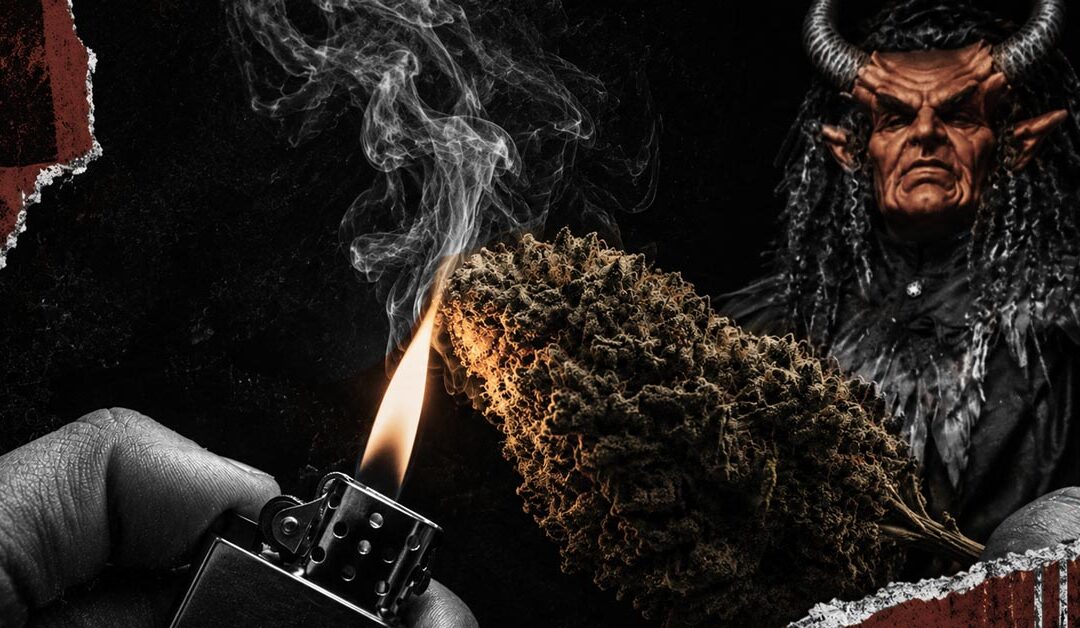
To turn THCA into THC, you have to knock that extra piece off, and heat is what does it. There is a name for the process, decarboxylation, or decarb for short, and you are doing it every time you use cannabis whether you think about it or not. The flame on a joint, the coil in a vape, the oven when you make edibles. All of them heat the THCA enough to drop the carboxyl group and switch it on. No heat, no high. That is the whole reason you cannot just chew on a nug and expect anything.
Why the label number is bigger than your experience
Look closely at a lab label and you will usually see two figures, a THCA number and a “Total THC” number. Total THC is not a measurement of what is in the flower right now. It is a calculation. It assumes every bit of THCA converts perfectly into THC and adds that to whatever active THC is already there. It is the best-case ceiling, the math, the theoretical maximum.
Real life is messier. Burning a joint is a sloppy, chaotic way to apply heat. Some THCA never converts, some goes up in smoke without doing anything, and some of the THC that does form gets destroyed by the heat before it reaches you. So the amount that lands in your bloodstream is meaningfully lower than that Total THC figure. The jar quotes you a ceiling and lets you assume it is a floor.
One bit of math, made painless
You will sometimes see Total THC worked out as the THCA number times about 0.877, plus any existing THC. There is a simple reason for that fraction. THCA is a heavier molecule because of that extra carboxyl group, and when it loses the group, it loses weight. It sheds carbon dioxide. So you do not get a gram of THC for every gram of THCA. You get a little less. The 0.877 is just the math accounting for the weight that floats off as the molecule switches on.
Why the method changes what you get
Because conversion depends on how you apply heat, how you consume changes how much active THC you end up with. Combustion, meaning a joint or a bowl, is the least efficient. You lose a real chunk to the flame. Vaporizing at a controlled temperature converts more cleanly, because the heat is steadier and lower. Edibles are their own creature. You decarb the cannabis on purpose first, and then your liver turns the THC into a compound called 11-hydroxy-THC, which is stronger and lasts longer. That is why a properly made edible can put you on the floor in a way the same amount of smoked flower never would.
The short version: treat “Total THC” as a ceiling, not a promise, and remember that what reaches you depends as much on how you heat it as on what the jar claims. If you want the companion piece, the one about how that number gets gamed before it is even calculated, that is High THC Doesn’t Mean Good Weed.
Frequently Asked Questions
Does THCA get you high?
No, not on its own. THCA is non-intoxicating until heat converts it into THC, which happens when you smoke, vape, or cook it.
What is the difference between THCA and THC?
THCA is the raw, inactive acid form found in living and fresh cannabis. THC is the active form that appears once heat strips a carboxyl group off the THCA.
Why is “Total THC” higher than “THC” on my label?
Total THC is a calculated maximum that assumes all the THCA converts. Real conversion is never complete, so the amount you absorb is lower than that number.
Does smoking convert all the THCA into THC?
No. Combustion is inefficient. Some THCA never converts and some THC gets destroyed by the heat, so you get less active THC than the label’s theoretical total.
Why do edibles feel so much stronger?
The cannabis gets fully decarbed while it cooks, and then your liver turns the THC into 11-hydroxy-THC, which is more potent and lasts longer than the THC you inhale.